
A different rhythm across Markoria
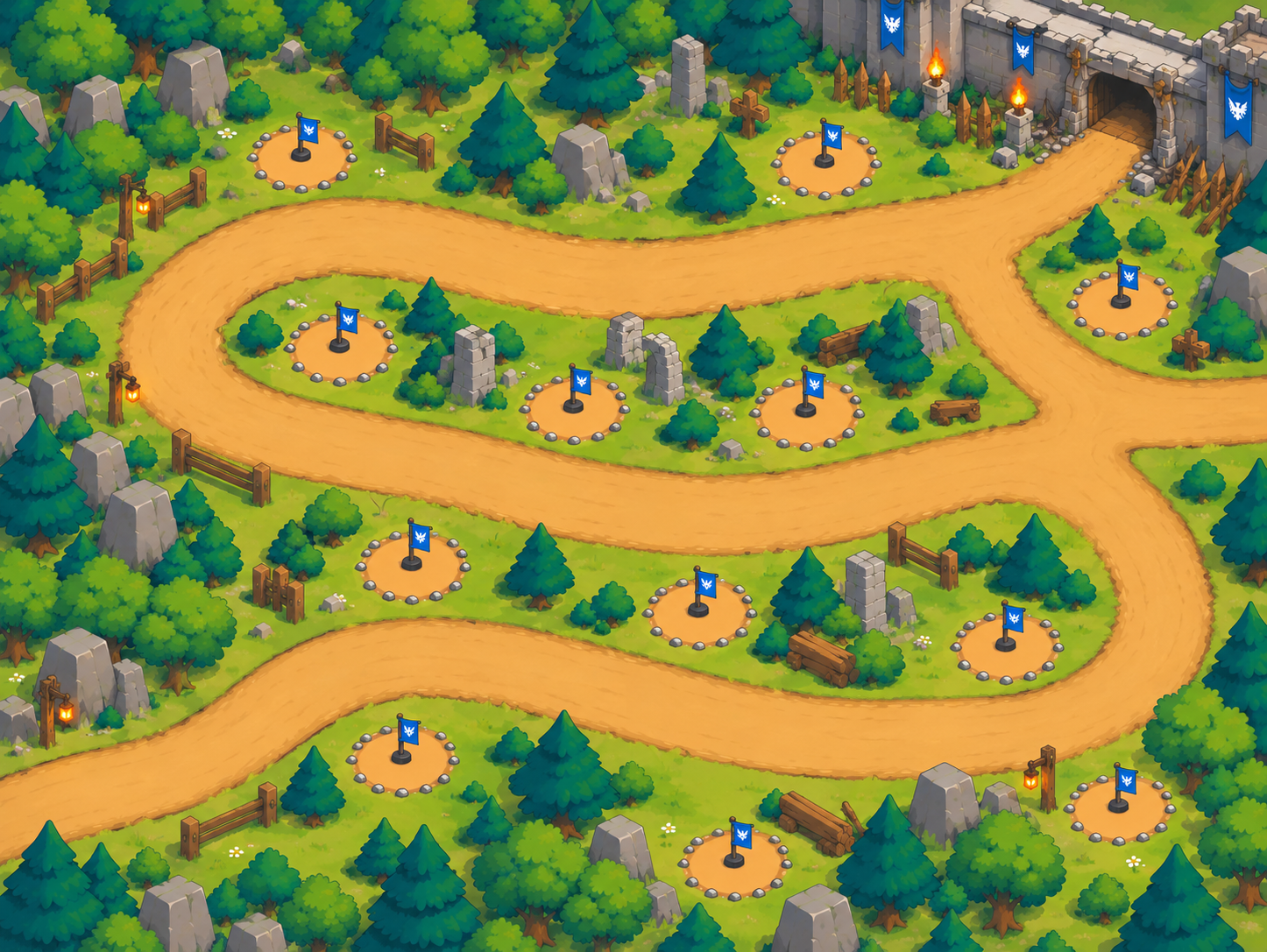
The redesign covers eight main battles and three optional missions: 110 waves and 1,435 scheduled enemies. Waves use smaller groups, pauses and combinations that give each enemy a job. Boss reinforcements and summoned spirits are separate from that scheduled total and have explicit limits.
Kingdom Rush provided a reference for roles, counterplay and pacing. Milloria has its own routes, range units, hero party and specialization economy, so matching another game’s raw numbers would not produce the same battle. Enemy health stays fixed; difficulty comes from the enemies together, the roads they use and the time available to respond.
Two new reasons to change your defense
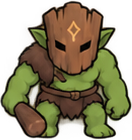
Orc Hexbound enters Eastern Road in wave 4. With 360 HP, 65% Arcane resistance and 50% resistance to Fire, Frost and Electric damage, it challenges spell-heavy defenses. Physical and explosive attacks deal full damage. The masked orc fully replaces the proposed Prismback Beetle; they are not two separate enemies.
Briarheart first appears in Mirewood Pass in wave 9. Its 520 HP and 8 HP-per-second recovery reward sustained focus. Burning stops recovery while active and for three seconds afterward, giving Inferno a useful role alongside concentrated burst damage. Briarheart resists physical and explosive damage by 15%, while spells deal normal damage.
Gold, reach and a line that can hold
Starting gold now ranges from 320 at Silverwood to 520 in the late campaign. Basic Archers and Barracks cost 80 gold, Mages 100 and Cannons 140. Upgrading remains a choice between stronger coverage and another position; selling returns 70% of invested gold.
The initial candidate values were tested in Milloria’s actual combat simulation. Some otherwise sensible defenses could not cover the roads or finish their targets. Explicit tower range and strike adjustments were made from those trials, while keeping enemy counts, fixed enemy health and starting gold. These are documented changes to tower values, not a hidden difficulty multiplier.
Barracks soldiers now begin at 50 HP, with 100 HP at tier 2; Royal Guards have 200 HP and Berserkers 230. Wounded soldiers recover out of combat. Permanent upgrades retain their saved ranks and cost 1, 2 and 3 stars; most bonuses now progress by 5%, 10% and 15%, with armor adding 3, 6 and 9 percentage points.
Support with a position and a limit
Milla’s passive supports the nearest three Archer towers within 220 units for 8% extra damage. Marko supports up to six nearby soldiers with 10% more maximum health and damage. Their position matters, and their support ends when they fall.
Shamans heal at most three nearby allies. Cannon and Bombardier explosions hit up to six targets; Earthhammer hits up to eight, with half damage in the outer ring. Boss heavy strikes affect at most three defenders. Finite recipient limits make crowd control useful without turning one effect into an answer to every enemy.
The Black Marshal can call twelve reinforcements over his encounter, with at most six active. Gravecallers have two active minions and six lifetime summons each. Morvayne calls two Mirebound Wraiths at each of three health thresholds, sharing an eight-active spectral limit with other summons.
Animation follows the feet
The supplied eight-direction artwork now drives Orc Hexbound and Briarheart walking, attacks, hit reactions and deaths. Hexbound uses the four-pose walking follow-up; Briarheart retains six walking poses. Extraction repairs address local crops, scale, foot anchors and continuity while retaining the source masters. Runtime art uses the game’s verified lossless WebP pipeline.
Walking phase follows distance traveled and stops at rest. The small Hexbound ward glint communicates resisted spell damage; it is not a shield cast or immunity window. Briarheart’s regeneration effect follows its actual recovery eligibility.

What the tests show so far
Eighty-eight production-simulation runs completed all eleven levels under normal and early wave calls. The plans used conservative earned-star budgets, natural Marko progression, no optional Milla unlock and no favorable rare-upgrade procs. Elden Grove retains its free introduction guest. These are reproducible winning plans, not a claim that every build wins or that human playtesting is finished.
Focused combat, artwork, animation, save and campaign checks pass. The full regression suite is not clean; its remaining failures require review before release. Existing earned awards are preserved: The Big Boom now asks for eight kills in one Earthhammer strike, and Piercing Legend asks for five distinct Royal Shot victims.
A separate 45-second physical iPhone stress run reached 162 retained enemy objects, including any death presentation objects. It recorded about 625 MiB peak footprint, a 1.53-second preload, 16.67 ms at the 99th percentile of display callbacks and a 43.73 ms maximum callback interval. Those callbacks are not GPU frame timings, and there is no matched pre-change device baseline. Longer sessions and broader device testing are still needed.
The game and website changes remain local and unpublished. This is a development update, not a release announcement.
Written from game catalogs and implementation reports for the 2026-10-25 development snapshot. Later changes are noted above; use the wiki for current gameplay values. Validation refers to the checks described in this journal.
← All development notes